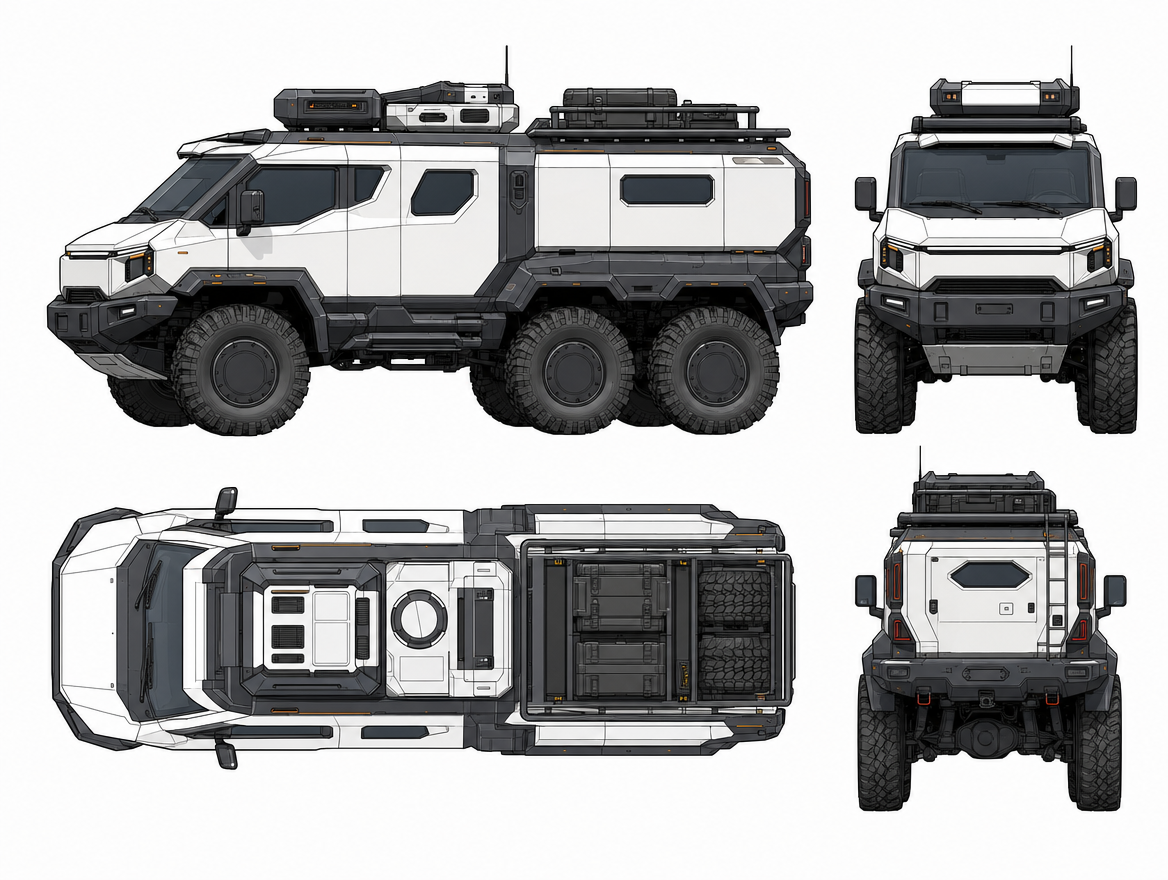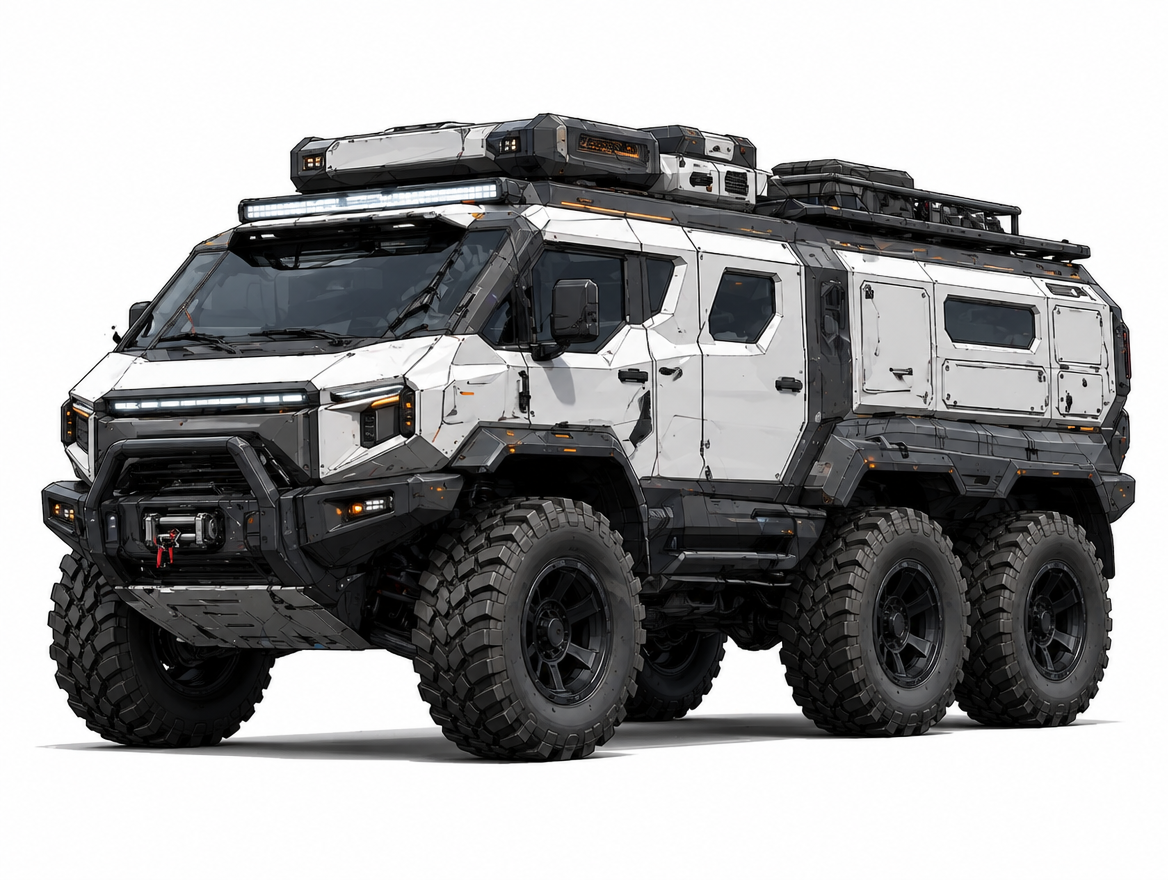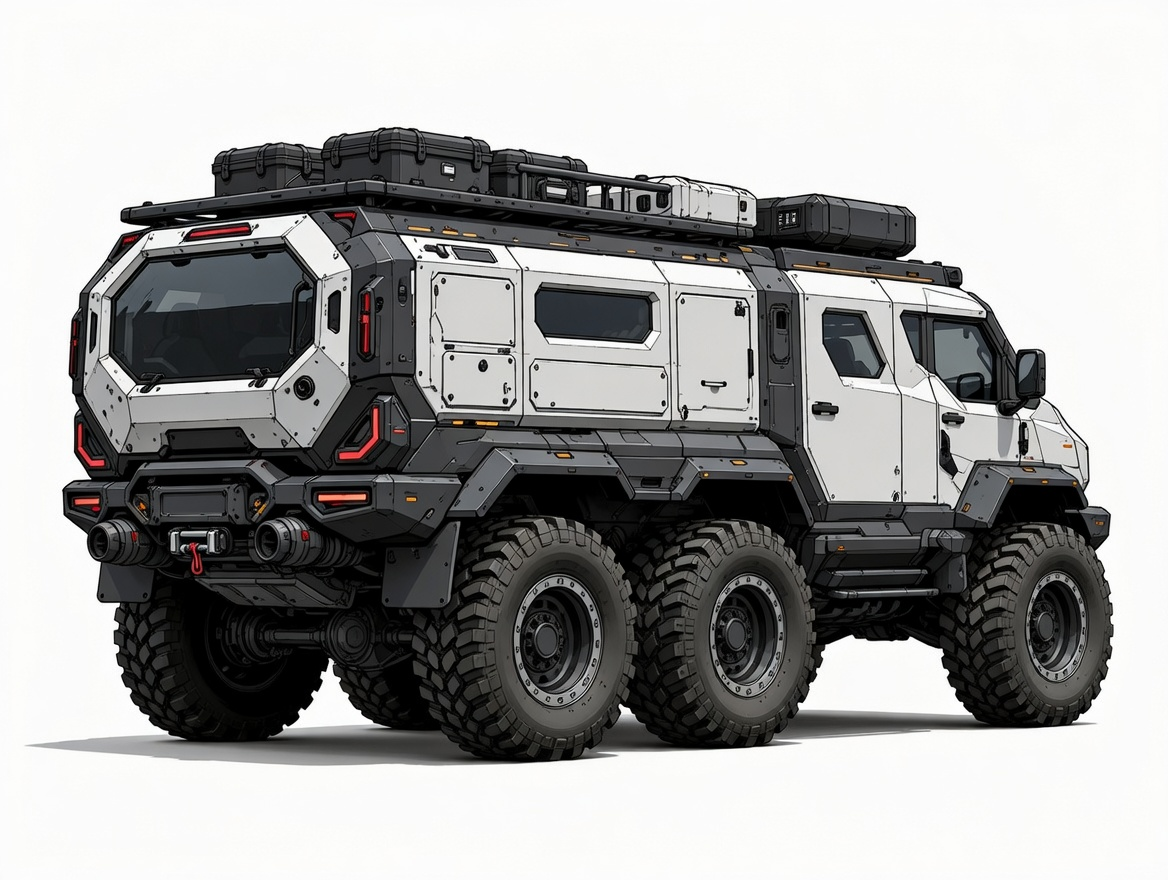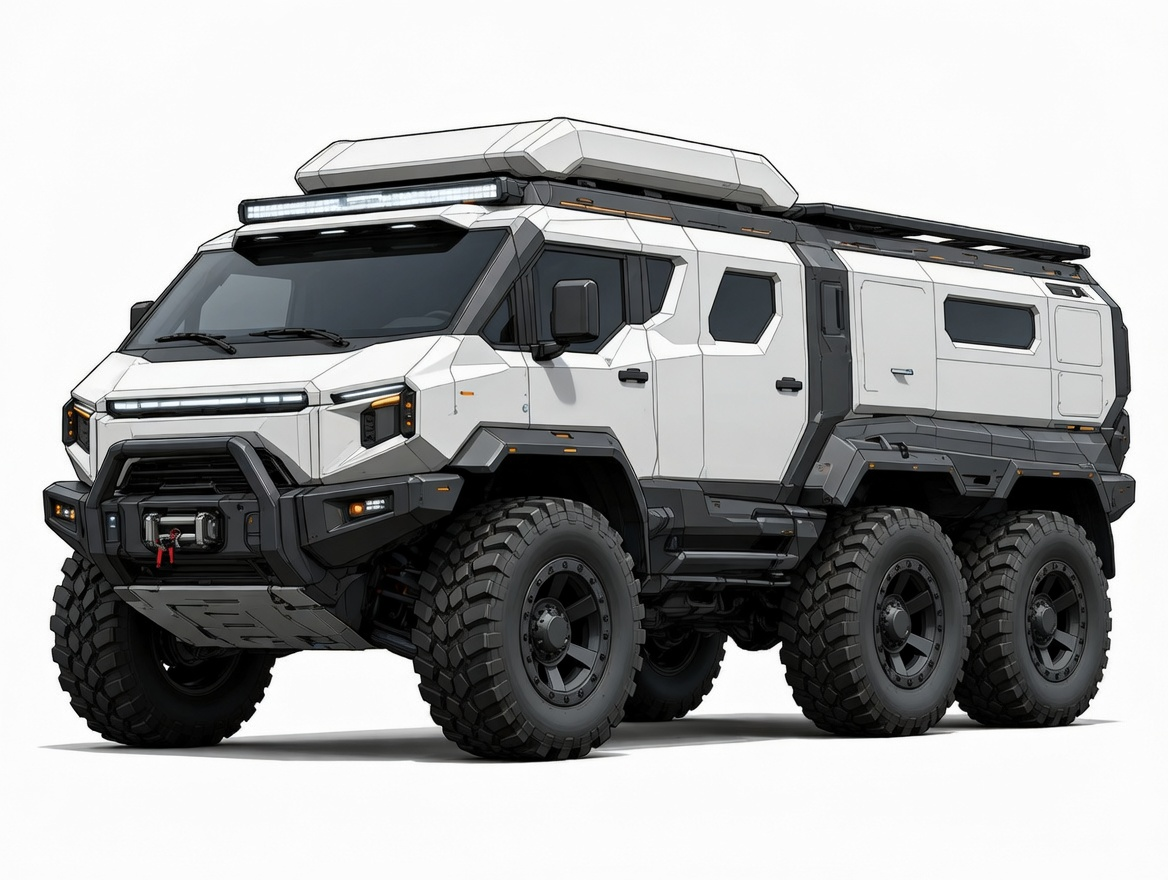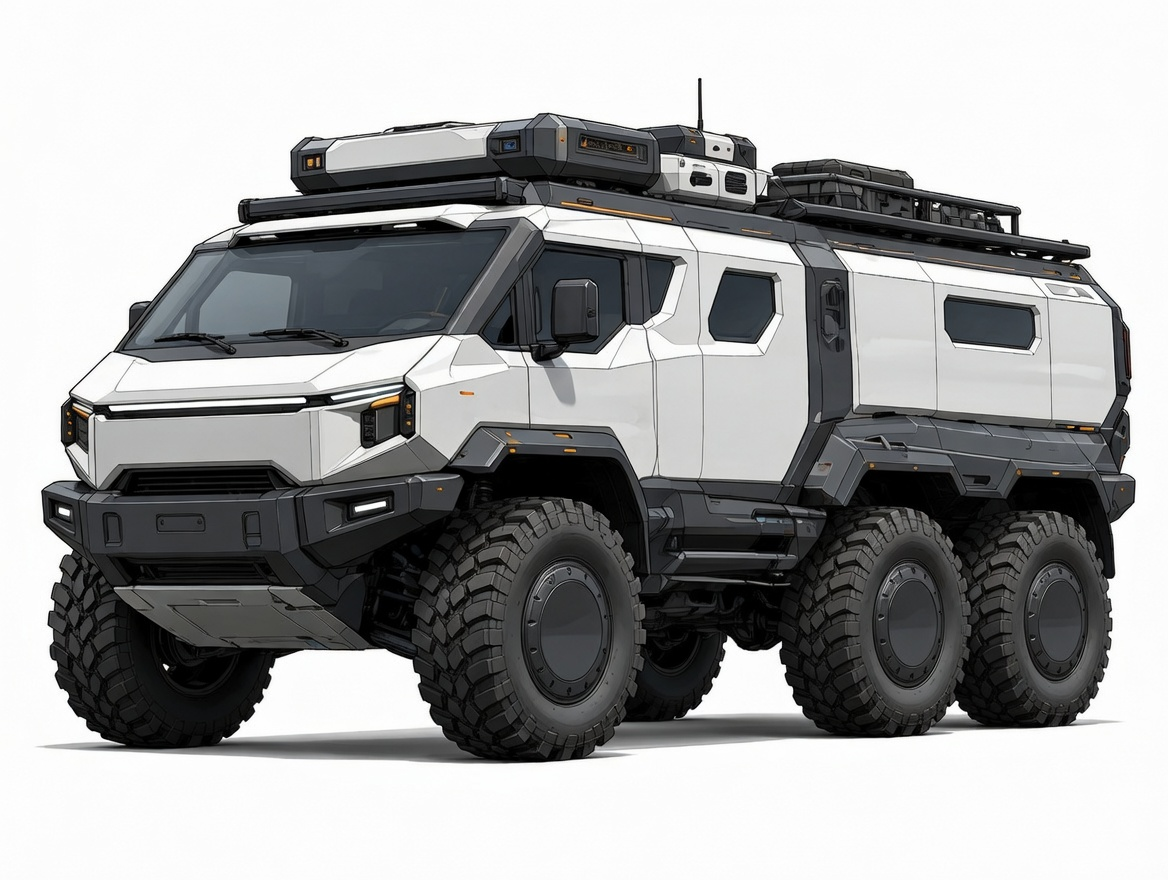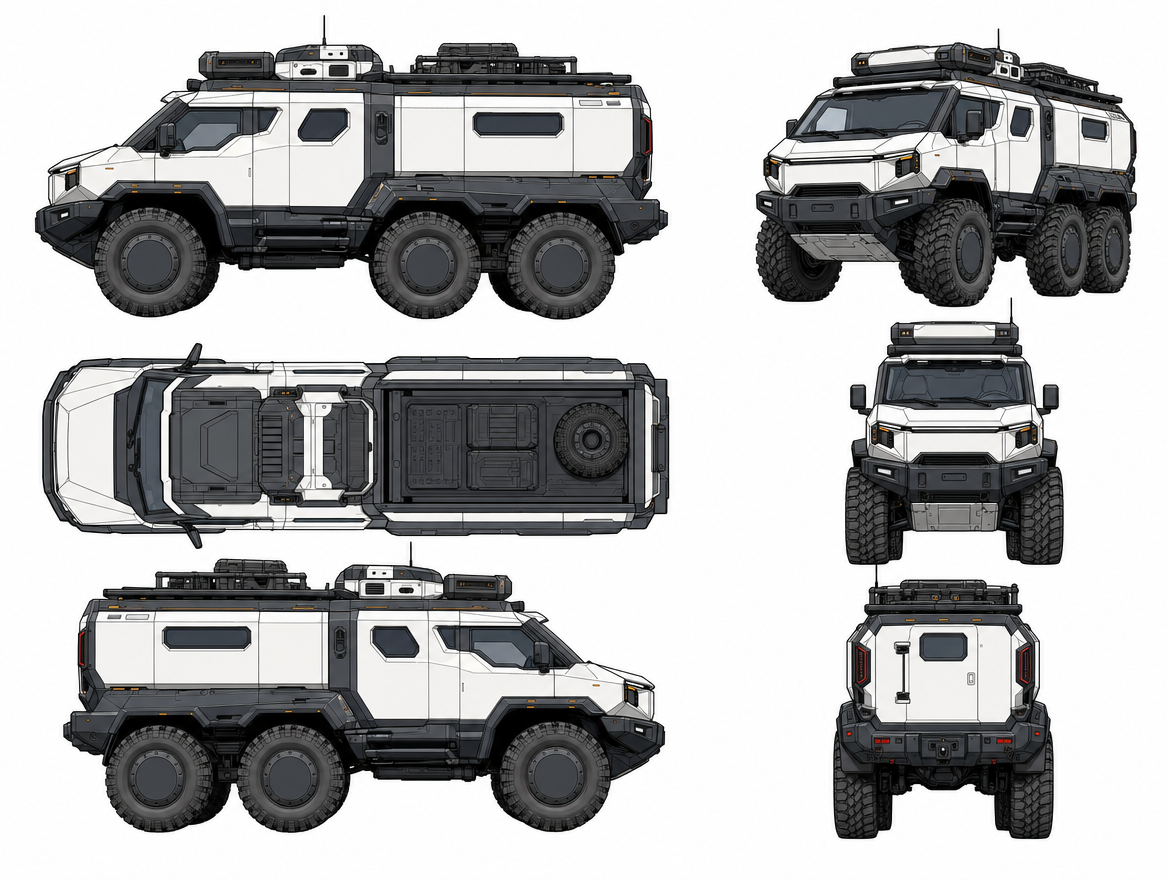
The fleet’s primary surface rover. Concept-art locked. One of three surface vehicles in the fleet (pickup truck, van, rover); the transport’s cargo bay holds one at a time, mission-selected.
At a glance
- Form: 6-wheel armored expedition rover, APC-style register (6.0 m long, 2.4 m wide, 2.4 m tall)
- Drivetrain: six-wheel independent electric drive (one motor per wheel, 6x6 configuration with single front axle plus tandem rear axle, all powered)
- Fuel source: enclosed deuterium-fusion micro-cell, 150 kW continuous, 300 kWh battery buffer
- Hull register: armored, suitable for contested-ground deployments and hostile-environment recon
- Accent: ink-black with crimson (per color-craft tokens) on fender flares, rocker panels, wheel hubs, roof equipment cluster, bull bar, and sensor housings
- Crew capacity: 6 in pressurized cabin (driver, co-driver, 4 rear in two pairs)
Capabilities
- Top speed 70 kph on graded surface, 30 kph rough terrain; 500 km range on full charge in Mars-class atmosphere
- Climbs 40-degree slopes, clears 0.7 m steps, wades 0.6 m, tows 4,000 kg
- Atmosphere tolerance vacuum through 1.5 atm; operational from -120 C to +40 C
- Helmet-off pressurized operation throughout, with integrated airlock cycle for suit-up and suit-down inside the cabin
- Mobile-base mode: sustains six-person crew for up to 5 days stationary without recharge
- Continuous mobile operating time approximately 40 hours typical surface ops
- Forward winch rated 3,500 kg pull (heavier than van or pickup), red hook visible at rest
- Selectable rear-axle steering for tight turns and crab-walk; adaptive ride-height control
Mission profile
The rover is the fleet’s contested-ground vehicle. Its primary use cases:
- Forward operating base: armored shelter while crew operates from it
- Multi-day expedition in difficult terrain that defeats the van
- Contested-ground operation: armored crew transport in security-sensitive deployments
- Long-range recon across terrain that defeats lighter vehicles
- Heavy-terrain geological survey, sample recovery, surface fabrication in difficult environments
For shelter or equipment beyond the rover’s onboard capacity, the mothership’s surface-deployment system drops cargo containers to the rover’s location.
A typical deployment sequence: transport departs mothership with rover loaded; transport lands on surface; rover rolls out via the transport’s rear ramp; transport returns to orbit or stays on surface as forward base.
Visual
Box-truck or APC-style armored body with sloped angular forward face. Six visible expedition-grade tires (1.05 m diameter) under dark fender flares. Front bull bar with push bar and red-hook winch. Sloped forward face carries angular LED headlights flanking a dark grille area, plus integrated daytime running lights. Side door (driver-side starboard) with window. Rear barn doors (two outward-opening) for cargo and rapid crew egress. Dark window glass on cabin and side door window.
Roof carries a structured equipment cluster, not a flat rack: LED light bar, antenna stubs (line-of-sight, satellite-ish relay, Atlas-distributed link), deployable periscope or sensor mast, two armored top-hatch covers, and rooftop tie-downs compatible with the modular cargo container family.
Two-color palette: matte white-gray armored body (matching mothership, transport, pickup truck, van) with ink-black accent and crimson detail on fender flares, rocker panels, wheel hubs, roof equipment cluster, bull bar, and sensor housings. Reads as fleet-matching at silhouette distance, but heavier and more imposing than the van or pickup. Distinguishable by the 6-wheel chassis (single front axle plus tandem rear axle), armored APC silhouette, and the roof equipment cluster.
Gallery