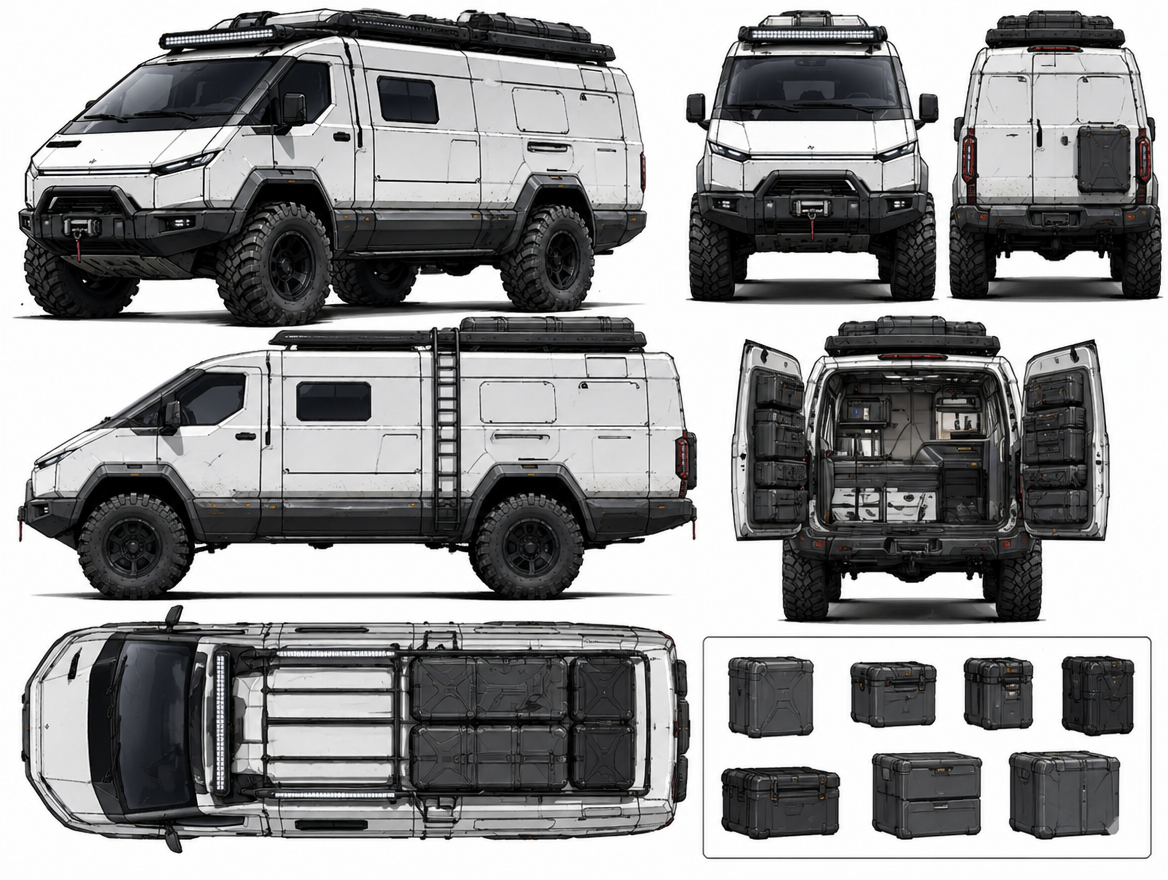
Surface expedition van. Mobile-base configuration with multi-day crew accommodation. One of three surface vehicles in the fleet (pickup truck, van, rover); the transport’s cargo bay holds one at a time, mission-selected.
At a glance
- Form: 5.9 m box-body 4-wheel expedition van (2.3 m wide, 2.45 m tall with roof rack)
- Drivetrain: four-wheel independent electric drive, one motor per wheel, all-wheel drive, Ackermann front steering
- Fuel source: enclosed deuterium-fusion micro-cell (100 kW continuous, 250 kWh battery buffer)
- Hull register: matte white-gray (consistent across the fleet)
- Stencil accent: cool-blue per
--craft-van-*color tokens - Crew capacity: 4 in pressurized cabin (transit); sleeps 4 in fold-out berths (mobile-base mode)
Capabilities
- Mobile-base sustainment: four-person crew, seven days stationary without recharge
- Continuous mobile operating time: approximately 35 hours of typical surface ops
- Range on full charge: 450 km (Mars-class atmosphere, average terrain)
- Atmosphere tolerance: vacuum through 1.5 atm; helmet-off cabin operation throughout
- Temperature operational: -120 C to +40 C (parked survivable -180 C to +60 C)
- Climbing slope 35 degrees, 0.5 m step, 0.45 m wading depth
- Integrated airlock cycle for suit-up and suit-down inside the cabin
- Forward LIDAR-equivalent imaging, 360-degree visual coverage, atmospheric monitoring (pressure, composition, particulate, radiation), interior spectrometer, deployable roof-rack weather station
- Direct line-of-sight transmission to transport, mothership, or sister-ship; surface range without relay approximately 200 km, horizon-limited
- Forward winch (2,500 kg pull, red hook visible at rest), front bull bar, integrated LED light bar
Mission profile
The van is the fleet’s mobile-base option: lighter than the rover, enclosed unlike the pickup truck. Four operating modes:
- Forward base camp: van as fixed shelter while crew operate from it on foot or with deployed equipment.
- Multi-day expedition: crew sleeps in van overnight, drives to next site by day.
- Medical isolation: van as quarantined cabin.
- Sister-ship rendezvous outpost: van as ground waypoint.
For shelter or equipment beyond the van’s onboard capacity, the mothership’s surface-deployment system drops modular cargo containers to the van’s location. The container family is interchangeable across van, pickup truck, rover, transport cargo bay, and ship cargo holds.
Crew typically operating the van: Hale (long-duration psychological support), Vance (medical), Frost (extended geological surveys), Brennan (command authority on extended insertions), Atlas-1 or Atlas-2 (driver or sensor operator).
Visual
Box-body expedition van with sloped angular forward face matching the pickup truck’s design language. Matte white-gray body. Dark accents on fender flares (all four wheels), rocker panels, wheel hubs, roof rack, integrated rear-quarter side ladder, bull bar, sensor housings, and roof cargo containers. Sliding starboard side door with dark window glass. Rear barn doors (two outward-opening). Full-length roof rack carrying sealed modular cargo containers, deployable weather station, solar / atmospheric scoop, and forward LED light bar. Cool-blue stencil accent per craft tokens. The van reads as fleet-matching at silhouette distance, distinguishable from the rover by its lighter 4-wheel chassis and from the pickup truck by its enclosed box body.